If your neck muscles can no longer hold your head up the way they used to, nighttime raises a question that daytime doesn’t: should you keep your neck brace on when you sleep? Maybe you’ve woken with your chin pressed to your chest after dozing in a recliner. Maybe your head rolls to one side during the night and you wake up stiff and sore.
You’re not alone in wondering. For people living with dropped head syndrome, ALS, myasthenia gravis, Parkinson’s, cervical dystonia, or ongoing neck muscle fatigue, sleep is when support needs change the most. This guide walks you through when sleeping in a neck brace makes sense, when it doesn’t, the best positions for a weak neck, and how to protect your skin and comfort overnight.
Why Neck Weakness Feels Different at Night
During the day, gravity is the enemy. An adult head weighs roughly 10 to 12 pounds, and when the muscles at the back of the neck are weak, that weight pulls the chin forward and down.
Lying down changes that equation. In many people with dropped head syndrome, the forward curve of the neck is passively correctable, meaning it straightens out when the head is supported or gently lifted. Researchers describing a series of sudden-onset cases noted that these patients often don’t show the dropped-head posture at all when the neck is resting in a neutral position.1 In practical terms: when you lie flat on a well-chosen pillow, the mattress and pillow may do the job your brace does during the day.
But “lying flat” isn’t how everyone sleeps. Many people with neck weakness sleep propped up, in a recliner, or in a hospital bed with the head raised. In those semi-upright positions, gravity is back in play, and the head can fall forward or roll sideways for hours at a time.
Can You Sleep in a Neck Brace? The Short Answer
It depends on why you wear it and what kind of brace it is.
If Your Surgeon Prescribed a Rigid Collar
After a fracture, spinal surgery, or a suspected unstable injury, follow your surgeon’s instructions exactly, including at night. Rigid collars in these situations are there to prevent movement while tissue heals, and the decision to remove one for sleep belongs to your medical team, not to comfort. Never swap a prescribed rigid collar for a soft or flexible brace on your own.
If You Wear a Brace for Chronic Neck Weakness
For long-term conditions like dropped head syndrome or neuromuscular weakness, the question is about support, not immobilization. Many people don’t need a brace when lying flat with good pillow support, but find one helpful when sleeping reclined, napping in a chair, or traveling. Talk with your doctor, physical therapist, or orthotist about your specific sleep setup, especially if your condition affects breathing or swallowing.
One reason this matters: the type of collar makes a big difference for overnight wear. A 2022 systematic review of prolonged hard-collar use found that pressure ulcers, swallowing difficulty, and raised pressure inside the skull were the most commonly reported problems, with pressure sores showing up in about 7% of cases.2
The Best Sleeping Positions for a Weak Neck
1. Back Sleeping (Supine): The Most Supported Position
Lying on your back spreads your body weight evenly and lets the neck rest in its natural curve without fighting gravity. The key is the pillow. Too flat, and the head tips backward; too thick, and the chin gets pushed toward the chest, the exact posture you’re trying to avoid. A large review of 35 studies on pillows and neck pain found that the shape and height of the pillow had a significant effect on cervical alignment, more than the material it was made from.3
A contoured or traction-style pillow with a raised neck roll can help hold that curve through the night. The Arc4life Adjustable Memory Foam Traction V Pillow is one option designed to cradle the neck and let you adjust the fill until the height feels right, which is useful because no two necks are the same shape.
2. Reclined or Semi-Upright: Where a Brace Helps Most
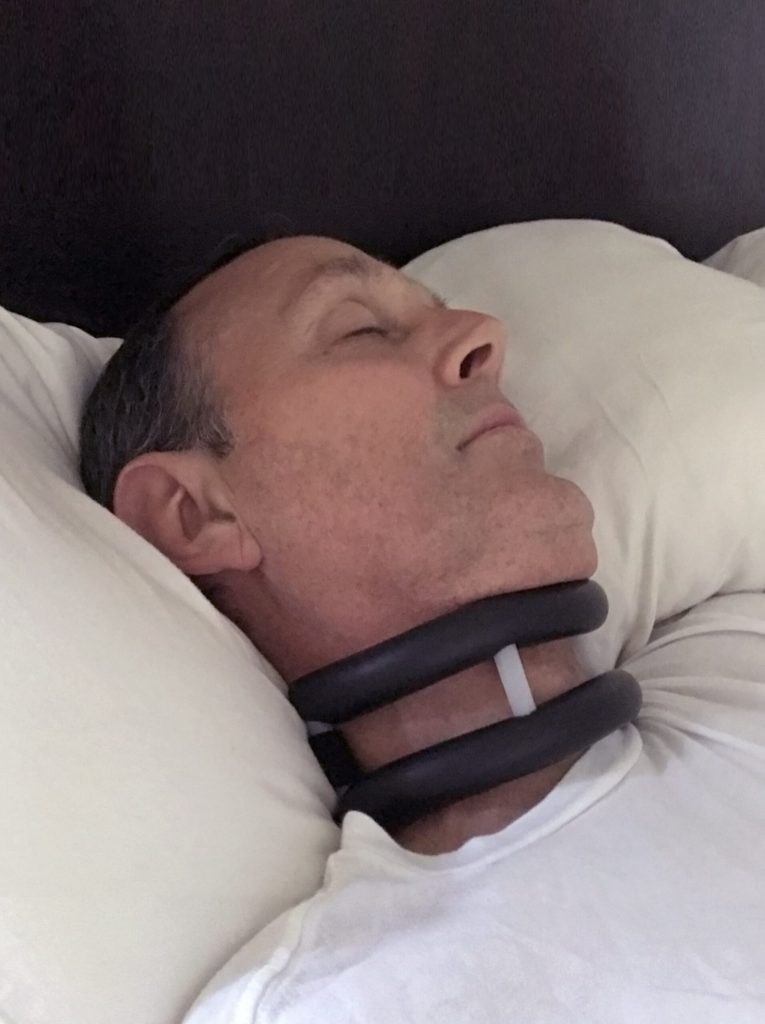
If you sleep in a recliner, adjustable bed, or propped on a wedge, this is the position where your head is most likely to drop forward or roll to the side. That’s where a lightweight, flexible brace can earn its keep. It can keep your chin off your chest and your airway in a more open position while you doze. Ask your care team whether wearing your brace in this position makes sense for you.
3. Side Sleeping: Fill the Gap
Side sleeping can work well if the pillow fills the space between your ear and the mattress so your head stays level with your spine. A neck brace usually isn’t needed here, but some people with uneven weakness or torticollis find that the head tilts toward the mattress.
4. Stomach Sleeping: Avoid It
Stomach sleeping forces the neck to twist sharply to one side for hours. For a neck that’s already weak, that sustained rotation can leave you stiff and sore for the whole next day.
What to Look for in a Brace You Might Wear Overnight
If you and your clinician decide a brace makes sense for reclined sleep or naps, comfort becomes as important as support. Look for:
- Low profile. Bulky foam or hard plastic edges can dig into the jaw and the back of the head when they meet a pillow.
- Breathable, washable materials. Night sweats and heat build-up under thick foam are common complaints.
- Adjustable height. The support height that’s right while sitting up may feel too tall lying back.
- Support all the way around. Side support matters at night, because the head often rolls sideways rather than straight forward.
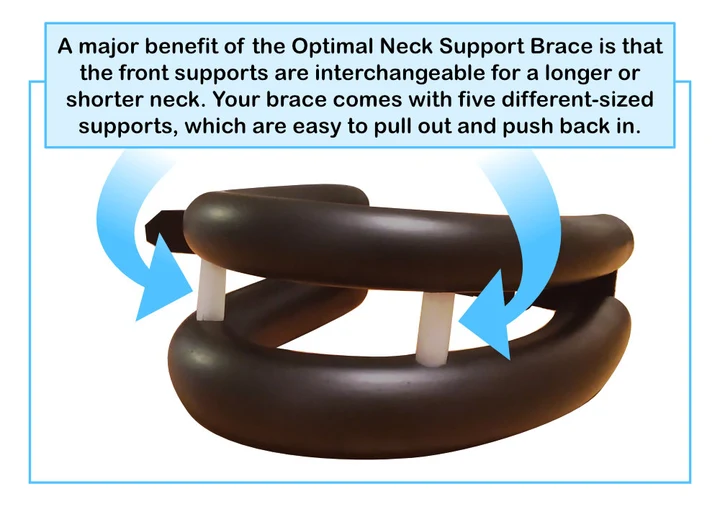
The Original Optimal Neck Support Brace was built around exactly these needs. It’s a low-profile, waterproof soft collar made from flexible synthetic tubing that gives 360-degree support while still allowing natural movement. It uses a hook-and-loop rear strap and comes with interchangeable front supports in six height options, so you can fine-tune the fit, and it’s handmade in the USA with a lifetime guarantee. You can learn more on the Optimal Neck Support Brace expert profile here on Neck Pain Support. As the manufacturer itself advises, check with your physician before wearing any cervical collar to bed.
Nighttime Brace Safety Tips
Check Your Skin Before Bed and First Thing in the Morning
Look under the chin, along the jawline, and at the back of the neck. A faint mark that fades within a few minutes is normal. Redness that stays, tenderness, blisters, or broken skin means the brace needs adjusting before you wear it again. Caregivers can do this check for anyone who can’t easily check or shift on their own.
Re-Check the Fit Lying Down
Fit your brace in the position you’ll actually sleep in. Never tighten a brace to stop it from shifting at night, since that adds pressure without adding support. If it slides, the height or size probably needs adjusting instead.
When to Remove the Brace and Call Your Doctor
Take the brace off and get medical guidance promptly if you notice:
- Trouble breathing, a choking sensation, or new difficulty swallowing
- Skin that is broken, blistered, or stays red after removal
- New or worsening numbness, tingling, or weakness in the arms or hands
- Severe headaches, dizziness, or a sudden change in how your head sits
Some neuromuscular conditions, including ALS and myasthenia gravis, can also affect breathing during sleep. If you have one of these conditions, your sleep setup, brace included, should be part of a conversation with your care team.
Final Thoughts: Support That Fits Your Nights, Too
Sleeping well with a weak neck comes down to three things: the right position, the right pillow, and knowing when a brace helps and when it doesn’t. For many people, lying flat on a well-fitted pillow is enough. For those who sleep reclined or nap sitting up, a comfortable, flexible brace can keep the head from dropping and help you wake up without that familiar stiffness.
Talk to your care team about your sleep setup, try one change at a time, and notice what helps. To learn more about a flexible, low-profile option designed for all-day and everyday wear, visit the Optimal Neck Support Brace expert profile or see the brace at necksupportbrace.com.
Medical Disclaimer: This article is written for informational purposes only and does not constitute medical advice. Neck weakness, dropped head syndrome, and related conditions should be diagnosed and treated by a qualified healthcare professional. Always consult your doctor before starting any new treatment, using therapeutic devices, or making significant changes to your sleep routine.
References
1. Eight cases of sudden-onset dropped head syndrome: patient series. Endo K, et al. J Neurosurg Case Lessons. 2021;2(22):CASE21177.
2. Adverse Events Relating to Prolonged Hard Collar Immobilisation: A Systematic Review and Meta-Analysis. Global Spine J. 2022;12(8):1968–1978.
3. Pang JCY, Tsang SMH, Fu ACL. The effects of pillow designs on neck pain, waking symptoms, neck disability, sleep quality and spinal alignment in adults: A systematic review and meta-analysis. Clin Biomech (Bristol). 2021;85:105353.


Leave a Reply